Why One Nation Has Surged
It’s not just about the bots. Political distribution has changed hands four times in sixty years. Like Trump, One Nation caught the fourth shift.

Every era of political campaigning is defined by one question. Who controls distribution. The answer has changed four times in sixty years. Each time it changed, political campaigns and how they reached, persuaded and converted support, experienced massive evolution.
Start with television. In 1960 Kennedy debated Nixon. People who heard it on radio thought Nixon won. People who watched it on television thought Kennedy won. Image beat radio, or to the point, Nixon’s lack of make-up and on-stage sweating, coupled with JFKs long preparation on the roof top of his hotel, making sure he got that golden tan just right before the big night. This was the first massive evolution in political campaigning. Networks suddenly controlled the boom gate, who got through and who did not. Airtime was the scarce resource, and everyone in the country received the same message at the same moment. The campaign’s job was simple….buy reach. Build a face for the living room. Manage a national story through a handful of gatekeepers.
Then the pipe began to splinter. By 2004 Howard Dean had turned the internet into a fundraising engine and an organising tool. Email lists. Small dollar donations at scale. The scarce resource shifted from airtime to the digital list. The campaign stopped being only a broadcaster and started being a network builder. It was still pushing a message outward. But supporters were now nodes in a system, not just an audience sitting on a couch in the living room.
The next shift was the deepest. Obama in 2008 and 2012 turned the campaign into a database that talks and converts. 2008 was the social and small dollar breakthrough. 2012 was the data revolution. Individual level modelling. Voter files matched to consumer data. A campaign that knew who you were before it spoke to you. Persuasion became a targeting problem. Static display advertising carried tailored messages to segments. Dynamic video creative did the same job, swapping the content depending on who was watching. Traditional broadcast logic and methodology died here. One message for everyone became one message per person, delivered at scale, broken down to suburb and street. However, the campaign still owned the channel, the data and how it was rolled out.
That is the part that has now broken.
Look at Trump. The campaign no longer controls distribution. The platforms do, and the platforms are run by engagement algorithms, not editors. You do not push a message to a segment anymore. You feed content into an attention economy and the algorithm decides who sees it. So Trump went where the attention actually lives. Long form podcasts. The Rogan interview ran three hours and pulled more than forty million views on YouTube alone, with another seventeen million on X. Half of Rogan’s audience are men under thirty five. That is a demographic no thirty second spot or digital add has reliably reached in a decade. Three unscripted hours beat a polished ad. The performance of authenticity beat production values and scripted lines. Set against that, a political ad is junk mail. A static image in the feed is junk mail. A thirty second spot in the ad break is junk mail on the television. It is addressed to no one, it interrupts something the viewer actually chose to watch, and it is binned on sight.
This is the second generation of digital media. The first generation was the platform, where tech owned feeds, ranked by a machine. The second generation is the creator economy sitting on top of it. Individuals with parasocial trust who carry your message because their audience believes them, not you. The line between content and advertising has dissolved. The persuasion is ambient, it arrives inside a conversation the listener chose to have.
There is a layer beneath the podcasts and influencers, and it is less visible. The feed does not only carry the famous voices. It carries thousands of accounts that look organic and are not quite. Profiles posting in concert, amplifying the same clips, pushing the same lines, timed so the algorithm reads as a crowd and spreads it. Researchers call it coordinated inauthentic behaviour. In plain terms it is a way of gaming distribution from below while the creators work it from above. The message arrives looking like a thousand people reaching the same conclusion on their own. Often it is a few operators and a large network of accounts.
Hence, the algorithm doing the sorting is more powerful than most campaigns grasp. The Financial Times has argued its pull is now strong enough to bend private life itself, linking heavy platform use to the decline in how often young people form relationships and pair off at all. Set aside whether that causation is fully settled. The point for a campaign is the size of the force it is feeding. A system that can move whether a generation couples up can certainly move how it votes.
The throughline across all four eras is a transfer of power over distribution. Networks held it. Then campaigns took a version of it back through data. Now platforms and creators hold it, and the campaign is a supplier feeding an ecosystem it does not own. The role has degraded step by step, the broadcaster, then list builder, then database, then content supplier. Each shift moved the campaign further from the point of contact with the voter.
There is a catch in this that nobody has solved.
Attention won through an algorithm is rented, not owned. The feed that lifts you this cycle can bury you the next. A network buy was a known quantity. A list was an asset you controlled. A creator’s audience is neither. It is borrowed trust, mediated by a platform whose incentives are not your incentives, ranked by a system that can change its logic overnight without telling you. The campaigns that have worked this out are chasing reach they cannot bank and influence they cannot renew on demand.
That is the strategic problem of the current era. The old model gave you control and cost you intimacy. The new model gives you intimacy and costs you control. And it is not an abstract problem. It is playing out right now, in the Australia’s second biggest state.
This year Victoria goes to the polls and it is the live test of everything above.
One Nation is running the current playbook. It sits at the top of the evolutionary curve, doing what Trump did. It feeds content into the algorithm and lets the feed carry it. It goes where attention already lives instead of paying to get in front of it. It borrows the trust of personalities whose audiences would never sit through a party ad, and the message arrives organically, inside content people chose to watch, that lines up with their personal values. The same networked amplification runs underneath it. Clusters of accounts pushing the same lines in concert, making a fringe position read as a mainstream mood, until the algorithm treats it as consensus and carries it cheaply for you.
The major parties are doing something else. They are sitting back and rerunning a version of the Obama model. Segment the electorate. Match the file. Push static digital advertising at the targets. The model was not wrong. It was the most advanced thing in the world in 2012. The trouble is that it is 2012’s model, built for a distribution environment that no longer exists.
This is not really a technology problem. It is a people problem. The operatives running the major campaigns inherited their craft from the generation that built the database model. In its day that craft was formidable. It worked because the world it was built for still existed. Their mentors were right for their moment. The inheritance is the trap. This generation took the methods without the instinct that created them. They are running their teachers’ playbook against an opponent their teachers never met. The algorithm.
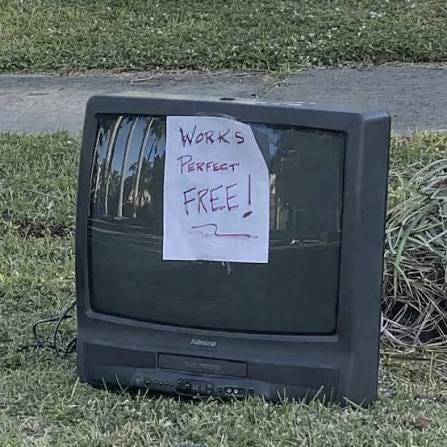
For example, pushing static digital ads into this new world is like trying to sell VHS recorders to Gen Z. The product is not defective. It is obsolete, of use now only to nostalgic collectors. The audience has moved to a format that works in an entirely different way, and no amount of polish on the old machine changes that. Nor does it justify the obscene sums that MPs, candidates and the traditional parties keep pouring into a medium that is already dead.